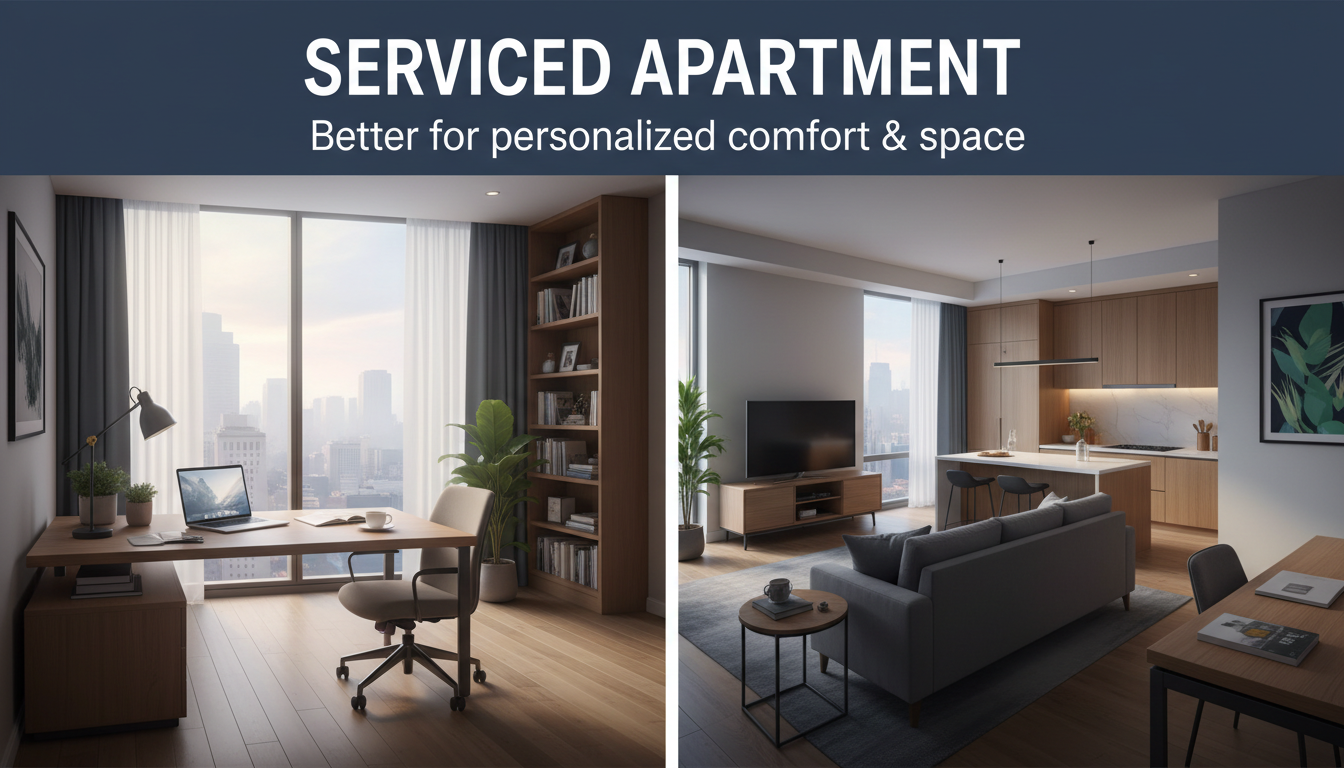
Choosing the right accommodation for a work trip in 2026 involves more than just finding a bed near an office. With the rise of the digital nomad lifestyle and the permanent integration of hybrid work, your room is now your office, your dining room, and your sanctuary. Deciding between a serviced apartment and an extended stay hotel can significantly impact your productivity, mental well-being, and travel budget. This guide breaks down the nuances of both options to help you make an informed booking decision for your next professional venture.
Quick Answer: Choosing Your Work Base
- Choose a Serviced Apartment if: You prioritize a residential feel, need a full kitchen to cook healthy meals, require separate rooms for living and working, or are staying for more than 30 days.
- Choose an Extended Stay Hotel if: You value consistent hotel services like daily housekeeping, on-site fitness centers, 24/7 front desk support, and the ability to earn loyalty program points.
- Work Productivity: Serviced apartments typically offer more desk space and ‘quiet zones,’ while extended stay hotels often provide better communal networking areas and business centers.
- Cost Factor: Apartments often become cheaper the longer you stay due to tax breaks (like VAT reduction in certain regions), whereas hotels offer more flexible short-term cancellation policies.
Why This Accommodation Choice Matters in 2026
In 2026, travel behavior has shifted toward ‘bleisure’—the blending of business and leisure. Travelers are no longer content with a cramped hotel desk and spotty WiFi. High-speed 6GHz networks, ergonomic furniture, and sustainable building practices are now standard expectations. Furthermore, AI-integrated room features allow guests to customize lighting and temperature for maximum focus. Selecting the wrong environment can lead to ‘zoom fatigue’ and reduced efficiency, making the distinction between an apartment and a hotel more critical than ever.
Deep Dive: Serviced Apartments for the Professional
Serviced apartments are designed to be a ‘home away from home.’ In 2026, these units have evolved into sophisticated spaces that cater specifically to the long-term professional. They usually feature a full kitchen (oven, dishwasher, full-sized fridge), a separate living area, and often a washing machine within the unit. This setup is ideal for those who want to maintain their domestic routine while working abroad.
Space and Privacy
The primary advantage is square footage. You aren’t confined to a single room where your bed is inches away from your laptop. Having a separate bedroom allows for a psychological ‘disconnect’ from work at the end of the day, which is vital for long-term mental health. For those traveling with partners or families, the additional rooms are non-negotiable for privacy during video calls.
Connectivity and Utilities
Most premium serviced apartments now offer dedicated fiber-optic lines. Unlike hotels where bandwidth is shared among hundreds of guests, apartments often provide a more stable connection suitable for heavy data transfers and high-definition streaming. However, be sure to verify if utilities are included in the base rate, as some long-term leases may bill electricity or water separately.
Deep Dive: Extended Stay Hotels for Efficiency
Extended stay hotels occupy the middle ground between a traditional hotel and an apartment. Brands like Residence Inn, Homewood Suites, or Adina have refined this model to offer ‘kitchenettes’ and semi-separate seating areas. These are best for the traveler who wants the convenience of a hotel with a bit more breathing room.
Services and Amenities
The ‘hotel’ aspect means you get perks that apartments often lack. This includes a 24-hour staffed reception for package deliveries, on-site gyms, and sometimes a complimentary breakfast or ‘social hour’ where you can network with other professionals. If your work requires a high level of support—such as printing services or a quick turnaround on dry cleaning—the extended stay hotel is the winner.
Loyalty and Scalability
For corporate travelers, the ability to accrue points in programs like Marriott Bonvoy, Hilton Honors, or IHG One Rewards is a major draw. These points can be used for future personal vacations, providing a tangible return on your work-related travel spend. Additionally, hotels make it much easier to extend a stay by a few days compared to apartments, which may have back-to-back bookings.
Comparison Table: Serviced Apartment vs. Extended Stay Hotel
| Feature | Serviced Apartment | Extended Stay Hotel | Winner for Work |
|---|---|---|---|
| Kitchen Facilities | Full kitchen (Oven, Hob, Large Fridge) | Kitchenette (Microwave, Two burners) | Serviced Apartment | Housekeeping | Weekly or Bi-weekly | Daily or every other day | Extended Stay Hotel | WiFi Quality | Private, high-speed fiber lines | Shared high-speed (Tiered access) | Serviced Apartment | On-site Support | Self-service or remote manager | 24/7 Front Desk & Concierge | Extended Stay Hotel | Space/Square Footage | High (Multiple rooms) | Moderate (Studio or 1-Bedroom) | Serviced Apartment | Loyalty Points | Rarely (Unless part of a brand) | Almost always available | Extended Stay Hotel |
Practical Checklist Before Booking Your 2026 Stay
Before you enter your credit card details, go through this checklist to ensure the property meets the modern standard for professional travel:
- WiFi Strength: Does the listing specify Mbps? Is it 6GHz or WiFi 6 compatible?
- Ergonomics: Is there a dedicated desk and an adjustable chair, or just a decorative stool?
- Noise Levels: Check reviews for mentions of construction, thin walls, or street noise.
- Power Outlets: Are there international adapters or USB-C ports built into the desk?
- Cancellation Policy: Does the property allow for changes if your project dates shift?
- Total Cost: Does the price include cleaning fees, service charges, and local occupancy taxes?
- Location: Is it within walking distance of groceries (for apartments) or your client’s office?
- Laundry: Is there an in-unit washer or an expensive hotel laundry service?
Conversion-Focused Advice: How to Get the Best Rate
Don’t just book the first price you see. In 2026, dynamic pricing is more aggressive than ever. To find the best value:
1. Compare Direct vs. Third-Party: Visit the official website of the serviced apartment or hotel. Often, they offer ‘Long Stay’ discounts or ‘Work from Hotel’ packages that aren’t listed on major booking platforms.
2. Check Guest Reviews: Focus on reviews from the last 3-6 months. Specifically search for keywords like ‘WiFi,’ ‘Desk,’ and ‘Quiet’ to see how other professionals fared.
3. Contact for Direct Offers: If you are staying for more than two weeks, send a quick email to the property manager. They may be willing to waive certain fees or provide a complimentary upgrade to ensure a guaranteed occupancy.
Common Mistakes to Avoid
Many travelers fall into the trap of booking based on photos alone. A common mistake is ignoring the ‘cleaning fee’ associated with many serviced apartments, which can add significantly to the nightly rate for short stays. Another error is assuming every ‘extended stay’ room has a desk; some modern designs have moved toward ‘minimalist’ furniture that is unsuitable for 8 hours of typing. Finally, always verify the exact location on a map. An apartment might be labeled ‘Central,’ but it could be in a residential area with no public transport links to the business district.
Expert Tips for 2026 Business Travel
- Virtual Tours: Use VR or 360-degree photo tools often provided on booking sites to ‘walk through’ the workspace before arriving.
- Sustainable Choices: Look for LEED-certified buildings or hotels with green energy initiatives, as many corporate travel policies in 2026 now require sustainability reporting.
- Package Handling: If you need to receive documents or equipment, confirm the property has a secure way to receive mail. Apartments without a concierge can be tricky for deliveries.
- The ‘Coffee Test’: Check if the kitchen or hotel provides a high-quality coffee machine. It’s a small detail that saves significant time and money on your work mornings.
Frequently Asked Questions (FAQ)
1. Is a serviced apartment cheaper than a hotel for a week?
Generally, for a one-week stay, prices are comparable. However, serviced apartments become significantly more cost-effective for stays of 14 nights or more, as they often offer tiered pricing and lower service overheads.
2. Do serviced apartments have gyms and pools?
It depends on the building. Luxury serviced apartments often share facilities with residential tenants, including high-end gyms. However, extended stay hotels are more likely to have these amenities managed and maintained to a consistent hospitality standard.
3. Can I host a business meeting in my serviced apartment?
Yes, this is one of the biggest draws. A multi-room apartment provides a professional setting (the living room) that is separate from your sleeping area. Many also offer access to shared co-working spaces or meeting rooms within the building.
4. Are utilities included in the price of an extended stay?
In almost all cases, yes. Hotels and serviced apartments for stays under 90 days usually include electricity, water, and WiFi in the quoted price. For very long-term corporate housing (3+ months), you should double-check the contract terms.
5. Which is safer: an apartment or a hotel?
Both are generally safe, but hotels offer the added security of a 24/7 presence and keycard-controlled elevators. Serviced apartments rely on secure building entries and smart locks. If security is a top priority, look for properties with ‘on-site management.’
6. What is the cancellation policy for these types of stays?
Extended stay hotels typically offer more flexible cancellation (24-72 hours before arrival). Serviced apartments often have stricter policies, requiring 7-14 days’ notice due to the residential nature of their booking cycles.
Conclusion
In the debate of serviced apartment vs. extended stay hotel, the ‘better’ choice depends on your personal work style and length of stay. If you crave the comforts of home, need a full kitchen, and want distinct boundaries between ‘work’ and ‘sleep,’ a serviced apartment is your best 2026 investment. If you prefer the frictionless experience of hotel services, loyalty rewards, and 24/7 support, an extended stay hotel will serve you better. Before you book, compare the latest rates on trusted platforms and read recent reviews to ensure your chosen base is optimized for productivity. Ready to find your next work-stay? Compare rates and room availability today to secure the best deal for your 2026 trip.
SEO Metadata Summary:
- Primary Keyword: serviced apartment vs extended stay hotel
- Short URL Slug: serviced-apartment-vs-extended-stay-hotel-work
- Search Intent: Commercial/Informational (Comparison and Booking)
- Google Discover Excerpt: Trying to decide between a serviced apartment and an extended stay hotel for your next work trip? We compare WiFi, workspace, costs, and amenities to find the perfect professional base for 2026.
- Internal Linking Suggestions: Link to ‘Top 10 Business Hotels in [City]’, ‘How to Negotiate Long-Stay Rates’, and ‘Best Luggage for Long-Term Travel’.
- External Source Suggestions: Refer to Google Travel for price tracking, TripAdvisor for recent guest photos, and official tourism boards for local tax information.