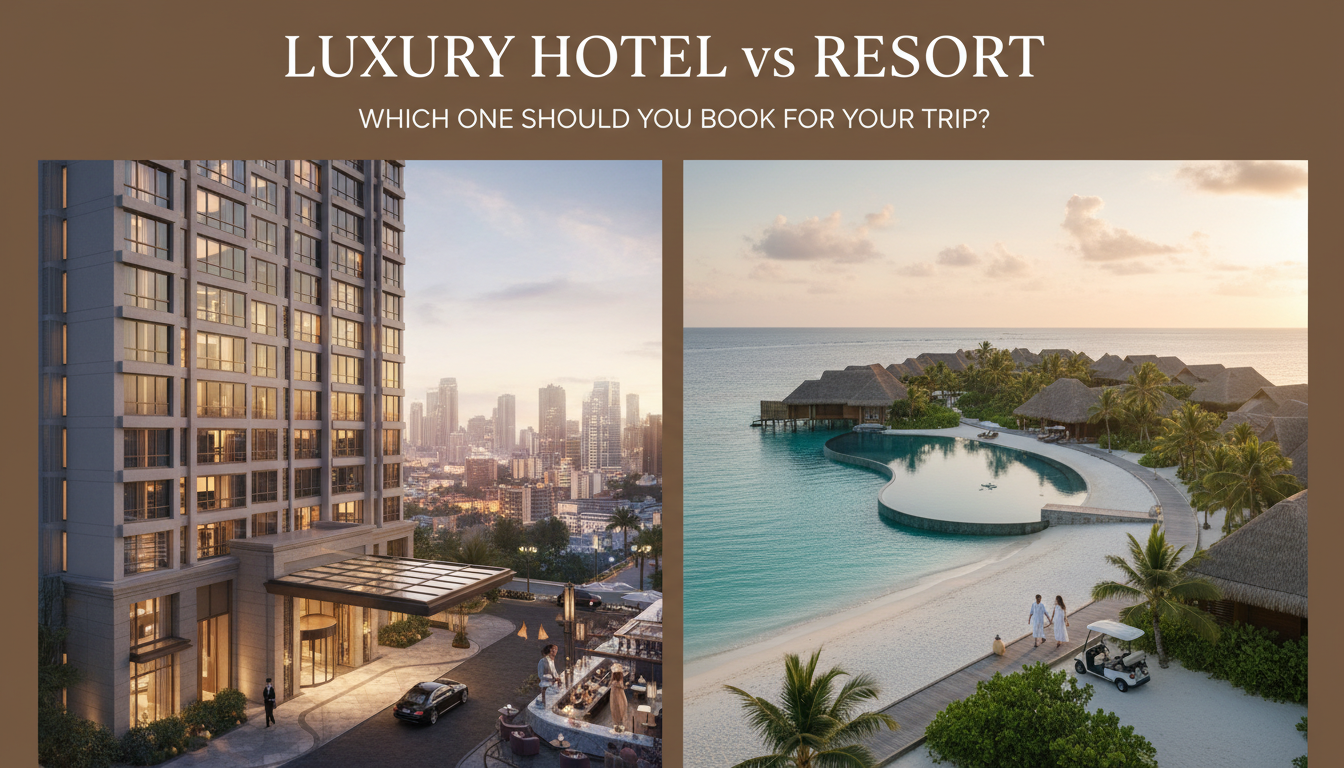
Choosing the right accommodation can make or break your 2026 travel experience. Whether you are planning a high-stakes business trip to a global financial hub or a restorative family getaway on a tropical coastline, the debate between a luxury hotel and a resort is central to your decision. While both offer high-end service, they cater to fundamentally different travel styles, schedules, and expectations regarding convenience and engagement. Understanding these nuances ensures you maximize your budget and your time.
Quick Answer: Luxury Hotel vs. Resort
- Luxury Hotels are typically situated in city centers, focusing on high-end lodging, sophisticated dining, and proximity to urban attractions or business districts.
- Resorts are self-contained destinations, often in scenic locations, offering extensive recreational activities, multiple pools, and often all-inclusive dining options.
- Best for Business: Luxury hotels offer better infrastructure for meetings, high-speed connectivity, and efficient transit access.
- Best for Families: Resorts provide kids’ clubs, organized entertainment, and sprawling grounds that keep everyone occupied without leaving the property.
- Best for Romance: Boutique luxury hotels offer intimacy and city charm, while resorts offer secluded privacy and beachside relaxation.
Why This Choice Matters in 2026
Travel in 2026 has shifted toward hyper-personalization and intentionality. Modern travelers are utilizing AI-driven planning tools to find stays that align with specific lifestyle needs, such as “work-from-anywhere” capabilities or sustainable luxury practices. In 2026, the distinction between a hotel and a resort is even more pronounced as properties integrate advanced technology—like biometric check-ins and VR room previews—alongside deep wellness programs. Whether you prioritize a seamless, tech-enabled urban stay or a slow-travel, carbon-neutral resort experience, your choice reflects a commitment to quality over mere convenience.
Defining the Luxury Hotel Experience
Luxury hotels are the pillars of urban travel. They are designed for guests who plan to spend a significant portion of their day exploring the surrounding city, attending conferences, or dining at external Michelin-starred restaurants. The primary value proposition of a luxury hotel is its location and its role as a refined “home base.”
Urban Integration and Convenience
Most luxury hotels occupy prime real estate in the heart of major cities. This allows guests to walk to famous landmarks, galleries, and corporate headquarters. The concierge service in these establishments is usually specialized in securing hard-to-get theater tickets or reservations at local hotspots, acting as your gateway to the city.
Professional Amenities
For the 2026 digital nomad or corporate executive, the luxury hotel is an office away from home. Expect soundproofed rooms, ergonomic workstations, and sophisticated executive lounges. The service is fast and unobtrusive, designed to respect the schedule of a traveler who is constantly on the move.
Defining the Resort Experience
A resort is more than just a place to sleep; it is a destination in itself. When you book a resort, the intention is often to stay within the property boundaries for the majority of the trip. Everything you need—from food and drink to entertainment and wellness—is provided on-site.
Self-Contained Entertainment
Resorts often feature massive footprints that include private beaches, golf courses, water parks, or extensive spa complexes. In 2026, many resorts have expanded their offerings to include “edutainment”—cultural workshops, coral reef restoration projects, or professional-grade cooking classes—making the stay intellectually stimulating as well as relaxing.
All-Inclusive vs. A La Carte
One of the biggest draws of a resort is the potential for all-inclusive pricing. This simplifies the financial aspect of a vacation, especially for families. In 2026, luxury resorts have moved away from basic buffets toward high-quality, farm-to-table dining experiences included in the room rate, offering better value for foodies.
Luxury Hotel vs. Resort: Detailed Comparison
To help you decide, it is essential to look at the specific attributes that define each stay. While a luxury hotel focuses on the “stay,” a resort focuses on the “play.”
| Feature | Luxury Hotel | Resort |
|---|---|---|
| Primary Setting | Urban / City Center | Coastal, Mountain, or Rural |
| Best For | Business, Short stays, Sightseeing | Vacations, Families, Relaxation |
| Key Benefit | Proximity to city life and transport | Everything is available on-site |
| Possible Drawback | Limited recreational facilities | Can be isolated from local culture |
| Conversion Tip | Book direct for loyalty points | Check for all-inclusive bundles |
Location and Accessibility Considerations
When choosing, consider your transit needs. A luxury hotel in a city like London, Tokyo, or New York usually means you are minutes away from public transit or ride-sharing hubs. Resorts, however, may require a long shuttle ride or even a private charter flight (common in destinations like the Maldives or remote parts of Bali). In 2026, look for properties that offer sustainable transfer options, such as electric vehicle shuttles, to align with eco-conscious travel trends.
Room Types and Space Requirements
Luxury hotels often prioritize vertical space and view. You might get a stunning floor-to-ceiling view of a skyline. Resorts tend to favor horizontal space, offering villas, bungalows, or interconnected suites that are better for large families. If you are traveling with children, a resort’s suite or villa often provides the separate living areas necessary for a stress-free environment.
Pricing, Value, and Hidden Fees
While the base price of a luxury hotel might seem lower, remember to factor in the cost of city dining, transportation, and entertainment. Resorts may have a higher upfront cost, but if it is all-inclusive, your daily spend could be zero. Always check for “resort fees” at hotels—a common practice that can add $40-$100 per night for amenities you may or may not use. In 2026, transparency is key, so look for properties that display “all-in” pricing inclusive of taxes and fees.
Practical Checklist Before Booking
- Location: Is it within walking distance of my primary interest?
- Total Price: Does the quote include taxes, resort fees, and service charges?
- Cancellation Policy: Is there a 24-hour or 48-hour free cancellation window?
- Dining: Does the hotel offer breakfast, or does the resort offer all-inclusive plans?
- Connectivity: Is high-speed WiFi included (essential for digital nomads)?
- Reviews: Have I checked the last 3 months of reviews on Google or TripAdvisor?
- Family Amenities: Are there specific clubs or pools for children?
- Business Facilities: Is there a quiet space for video calls or meetings?
Common Mistakes to Avoid
The most frequent error is booking a resort when you actually want to explore a city. If you stay at a remote resort but spend 3 hours a day in traffic trying to see local museums, you are wasting both time and money. Conversely, booking a city hotel for a “relaxing” week can feel claustrophobic if there is no pool or outdoor space. Another mistake is ignoring recent reviews; a property’s quality can change rapidly, and 2026 travelers should prioritize feedback from the current season.
Conversion-Focused Tips: Take Action
Ready to finalize your 2026 travel plans? Follow these steps to ensure a smooth booking process:
- Compare Rates: Use reputable platforms like Booking.com or Expedia to see the market rate, then check the official hotel website for direct booking perks like free late check-out.
- Check Availability: Peak seasons fill up fast—especially for popular resorts in the summer and winter holidays.
- Contact Directly: For special occasions like honeymoons or anniversaries, emailing the guest relations manager can often result in a room upgrade or a small welcome amenity.
Expert Tips for 2026 Travel
Stay ahead of the curve by joining hotel loyalty programs before you book. Even the lowest tier often grants free WiFi or member-only discounts. Additionally, use Google Maps’ Street View to check the surroundings of a luxury hotel; sometimes “city center” can mean a noisy construction zone or a less-than-desirable street. For resorts, look at the beach quality or pool-to-guest ratio in reviews to ensure you won’t be fighting for a sun lounger at 7:00 AM.
Frequently Asked Questions
1. Is a resort always more expensive than a luxury hotel?
Not necessarily. While the sticker price of a resort may be higher, once you include the costs of meals, activities, and transportation that a city hotel requires, a resort can often be more cost-effective for families and long-stay vacationers.
2. Can I stay at a resort for a business trip?
Yes, many modern resorts cater to “bleisure” (business + leisure) travelers with dedicated co-working spaces and high-speed internet. However, ensure the resort is not too far from your meeting locations.
3. What is the main difference in service style?
Luxury hotels usually offer formal, efficient, and professional service tailored to speed. Resorts often offer a more laid-back, friendly, and personal service style aimed at making you feel “at home.”
4. Are all-inclusive resorts worth it in 2026?
For those who want a stress-free budget where all food and drinks are pre-paid, yes. However, if you enjoy exploring local restaurants and street food, a standard luxury hotel or a room-only resort plan might be better.
5. Do luxury hotels have better fitness centers?
Often, yes. High-end city hotels cater to executives who maintain strict routines, offering state-of-the-art gyms. Resorts have gyms too, but their focus is often more on outdoor activities and yoga.
6. How do I find the best cancellation policies?
Always look for “Flexible” or “Fully Refundable” rates. In 2026, most major chains offer these, though they may cost slightly more than non-refundable bookings. It is worth the peace of mind.
Conclusion
The choice between a luxury hotel and a resort depends entirely on the purpose of your trip. If you crave the energy of a city and want to be in the middle of the action, a luxury hotel is your best bet. If you need to unplug, recharge, and have your every need met in one place, a resort is the clear winner. Before you book your 2026 adventure, compare the total costs, read the latest guest reviews, and consider what kind of memories you want to create. Start comparing your options today to secure the best rates and availability.