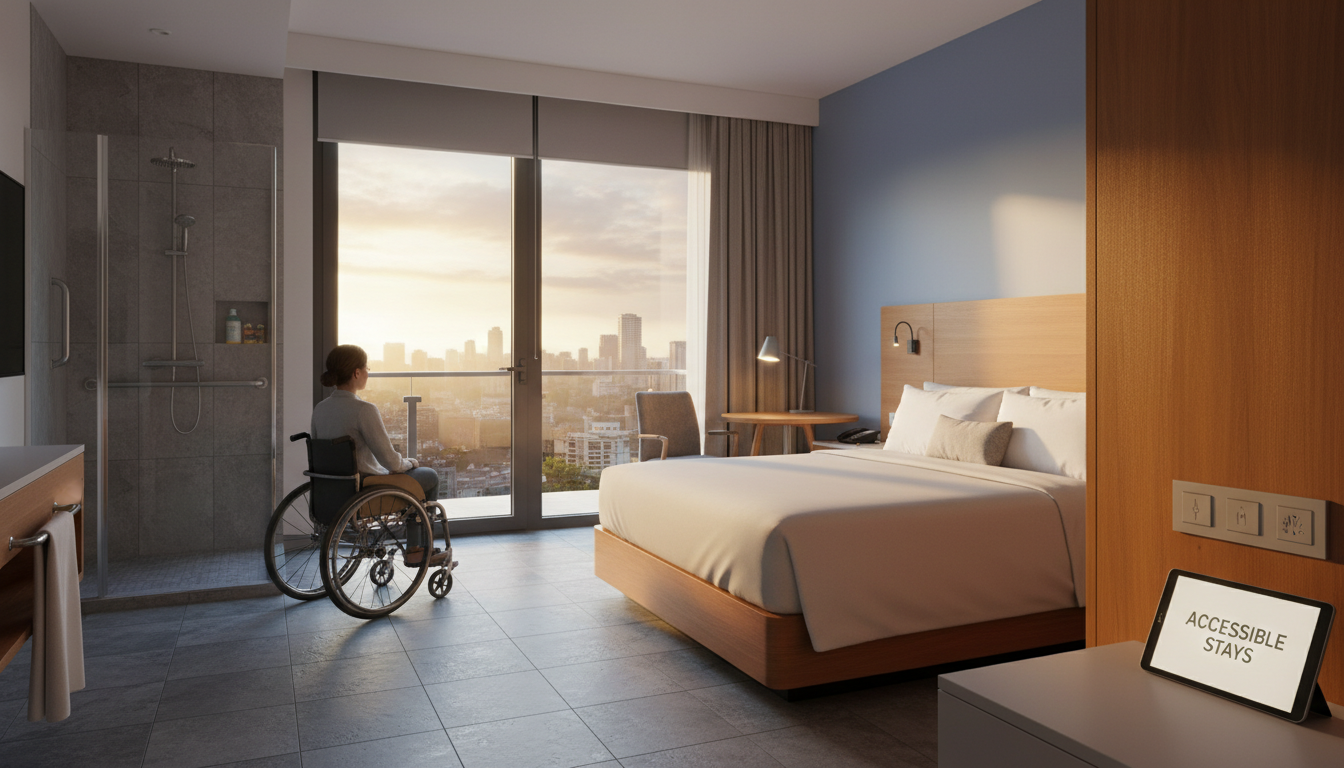
In 2026, travel has become more inclusive than ever before, with the hospitality industry prioritizing universal design to ensure every guest enjoys a seamless and dignified stay. Choosing the right accessible hotel involves more than just checking for a ramp at the entrance; it is about finding a property that offers independence, comfort, and safety through thoughtful architecture and empathetic service. Whether you are traveling for business, a family vacation, or a solo adventure, selecting a hotel with genuine wheelchair-friendly facilities ensures that your trip remains focused on the experience rather than the obstacles. High-quality accessibility is now a hallmark of luxury and modern hospitality, reflecting a commitment to serving the diverse needs of all travelers in the digital age.
Quick Answer: What Makes a Hotel Truly Wheelchair-Friendly?
- Look for rooms with a minimum doorway width of 32 inches to accommodate standard and motorized wheelchairs.
- Prioritize bathrooms featuring roll-in showers, sturdy grab bars, and lowered sinks or vanities.
- Ensure the property offers step-free access to all public areas, including restaurants, pools, and fitness centers.
- Check for the availability of hydraulic pool lifts and specialized equipment for recreation.
- Confirm that the hotel provides digital room keys and voice-controlled smart room features for added independence.
- Always verify bed height with the hotel directly to ensure easy transfers from a wheelchair.
Why This Hotel Topic Matters in 2026
As we move through 2026, the landscape of travel continues to evolve, driven by a surge in accessible tourism and the increasing spending power of travelers with disabilities. The modern traveler now expects transparency and precision in booking. With the rise of AI-driven travel planning, guests are using specialized filters to find accommodations that meet strict mobility requirements. Furthermore, the trend toward sustainable and inclusive stays means that hotels are being rated not just on their carbon footprint, but on their social accessibility. Digital nomadism among the disabled community is also on the rise, necessitating hotels that offer both accessible workspaces and living quarters. In 2026, direct booking benefits often include the ability to view a 3D virtual tour of the specific accessible room you are reserving, reducing the anxiety often associated with travel planning for those with mobility challenges.
Main Guide to Selecting Accessible Accommodations
Who These Hotel Options Are Best For
Accessible hotels are designed primarily for travelers using wheelchairs or mobility scooters, but their benefits extend far beyond a single demographic. These facilities are ideal for senior travelers who may require extra support, families with young children in strollers, and individuals recovering from surgery or temporary injuries. Additionally, the spacious layouts of accessible rooms are often preferred by business travelers who need more room to navigate and digital nomads who appreciate the uncluttered, functional design of modern universal suites.
Key Facilities to Look For
When researching potential stays, look for specific terminology that indicates a high level of accessibility. A truly wheelchair-friendly hotel should offer more than the legal minimum. Key features include:
- Roll-in Showers: A shower area without a lip or step, equipped with a fold-down bench and a handheld showerhead.
- Turning Radius: Sufficient floor space (usually a 60-inch diameter circle) in the bedroom and bathroom to allow for a full wheelchair turn.
- Lowered Controls: Light switches, thermostats, and closet rods placed at a height reachable from a seated position.
- Visual and Auditory Alerts: Emergency alarms that utilize both strobe lights and high-decibel sounds for guests with sensory impairments.
- Public Area Accessibility: Ramps with appropriate gradients, wide elevators with braille buttons and voice announcements, and accessible seating in dining areas.
Location Advantages and Terrain
The hotel’s location is just as important as its internal facilities. In 2026, smart cities offer better pavement quality and lowered curbs, making the area surrounding the hotel more navigable. Consider the proximity to accessible public transportation hubs, such as subway stations with working elevators or bus stops with low-floor boarding. It is also wise to check the local topography; a hotel might be fully accessible inside, but if it sits on a steep hill, your ability to explore the neighborhood independently may be limited.
Room Type and Value Considerations
Many hotels offer different tiers of accessible rooms, ranging from standard accessible rooms to luxury accessible suites. In many jurisdictions, hotels are legally prohibited from charging more for an accessible room than for a standard room of the same category. However, always check the value proposition—does the accessible room offer the same view or amenities as the non-accessible equivalent? In 2026, many boutique hotels are integrating accessibility into their most premium offerings, ensuring that functionality does not come at the expense of style.
Safety, Cleanliness, and Policy
Safety is paramount for travelers with limited mobility. Inquire about the hotel’s emergency evacuation plan for guests in accessible rooms. Are there evacuation chairs available in the stairwells? Are the staff trained in assisting guests with disabilities during a crisis? Regarding cleanliness, look for hotels that mention high-standard sanitization of high-touch areas, including grab bars and remote controls. Always review the cancellation and refund policy; flexibility is crucial in case of health issues or transportation disruptions.
Comparison of Accessible Hotel Types
| Hotel Type | Best For | Key Benefit | Possible Drawback | Conversion Tip |
|---|---|---|---|---|
| International Luxury Chains | Premium Comfort | Standardized ADA features and high-end service. | Often higher price points. | Check loyalty programs for free upgrades. |
| Modern Boutique Hotels | Unique Experiences | Stylish, integrated universal design. | Limited number of accessible rooms. | Book early to secure the specific room. |
| Extended Stay Suites | Digital Nomads & Families | Kitchenettes with lowered counters. | Less frequent housekeeping services. | Compare weekly rates for better value. |
| Airport/Business Hotels | Short Stays & Transit | Excellent proximity to transport and lifts. | Can be located in noisy industrial areas. | Verify 24/7 shuttle accessibility. |
Practical Checklist Before Booking Your Stay
Before you finalize your reservation in 2026, use this checklist to ensure the property meets your specific needs:
- Confirm the entrance to the hotel is step-free or has a permanent ramp.
- Verify that the bed height is compatible with your transfer needs (usually 20-23 inches).
- Ask for the exact width of the bathroom door and the room’s entrance door.
- Check if the shower is a true roll-in shower or if it has a small lip (curb).
- Inquire about the availability of a shower chair or bench if one is not built-in.
- Confirm that the hotel lift/elevator is large enough for your specific wheelchair model.
- Check if there is accessible parking or valet service included.
- Verify that common areas like the breakfast room or bar have accessible height tables.
- Review recent guest photos on platforms like TripAdvisor or Google Maps to verify facilities.
- Ask about the proximity of the room to the elevator to minimize long rolls down corridors.
- Check for free cancellation policies in case your travel plans change.
- Ensure the Wi-Fi is strong enough to handle video calls if you are a digital nomad.
How to Secure the Best Rates and Service
When you are ready to book, it is often beneficial to communicate directly with the hotel’s front desk or reservations manager. While third-party booking platforms are excellent for comparing prices and reading reviews, a direct call can clarify specific details that are not listed online. You might ask for a floor plan of the accessible room or request a room on a lower floor for quicker evacuation. Many hotels in 2026 offer exclusive perks for direct bookings, such as early check-in or late check-out, which can be incredibly helpful for travelers who need a little extra time. Don’t forget to check for membership discounts or seasonal promotions that can significantly lower your total cost.
Common Mistakes to Avoid
One of the most frequent errors is assuming that a “handicap accessible” label automatically means it is suitable for a wheelchair user. Some rooms may only be designed for those with minor mobility issues and may still have steps or narrow bathrooms. Another mistake is ignoring the recent guest reviews; look for comments specifically mentioning the accessibility features to see if they were functional during their stay. Avoid booking based solely on the lowest price, as budget accommodations may lack the necessary maintenance for lifts or automatic doors. Finally, never forget to verify if the “accessible” features extend to the hotel’s amenities like the pool or fitness center, as these are often overlooked in standard descriptions.
Expert Tips for a Stress-Free Stay
As a professional travel strategist, I recommend booking your accessible room at least three to six months in advance, especially for popular destinations. These rooms are limited in number and often sell out first. If you are traveling internationally, research the local accessibility laws of that country, as standards vary significantly from the ADA in the United States or the European Accessibility Act. Utilize Google Street View to virtually walk from the hotel entrance to the nearest transit stop to check for curb cuts and smooth surfaces. Lastly, always carry a small “access kit” with basic tools for your wheelchair and a power converter for medical equipment if traveling abroad.
Frequently Asked Questions (FAQ)
1. Are all hotels required to have wheelchair-friendly rooms?
While laws vary by country, most modern hotels in major tourism hubs are required by legislation (such as the ADA in the US or the Equality Act in the UK) to provide a certain number of accessible rooms. However, older or historic buildings may have exemptions, so always verify before booking.
2. Can I request specific equipment like a hoist or a higher toilet seat?
Many hotels can provide additional equipment upon request, or they can put you in touch with a local medical supply company that delivers rentals directly to your room. It is best to arrange this at least two weeks before your arrival.
3. Do accessible rooms cost more than standard rooms?
In most regions, it is illegal to charge a higher rate for an accessible room compared to a standard room of the same type. If you notice a price discrepancy, contact the hotel management for clarification.
4. How do I know if the hotel pool is accessible?
Look for mentions of “hydraulic lifts” or “sloped entry” in the hotel’s facility description. You can also contact the hotel directly to ask for a photo of the pool’s accessibility equipment to ensure it is in working order.
5. What should I do if my reserved accessible room is not available upon arrival?
This is a serious service failure. You should immediately speak with the manager. If they cannot provide an equivalent accessible room, they should arrange for an accessible room at a nearby hotel and cover the transportation and any price difference.
6. Are service animals allowed in accessible hotel rooms?
Yes, service animals are generally permitted in all areas of the hotel where guests are allowed, and hotels cannot charge an extra pet fee for them. However, it is courteous to inform the hotel in advance.
Conclusion
Finding the best accessible hotel in 2026 requires a blend of digital research and direct communication. By prioritizing properties that go beyond the basics and embrace universal design, you ensure a travel experience that is both comfortable and empowering. Remember to check for features like roll-in showers, verify bed heights, and utilize modern tools like virtual tours to vet your choice. Travel is a right, not a privilege, and the right accommodation is the key to unlocking the world. We encourage you to compare rates across trusted platforms, read the latest guest reviews, and contact hotels directly to secure the perfect wheelchair-friendly room for your next journey. Stay informed, book early, and travel with confidence.